

 North America
 Asia/Pacific
 Europe
 Back to Blog


Estimated reading time: 10–12 minutes
Veterinary PACS: What Clinics Actually Need (And Why Human PACS Fall Short)
PACS shouldn’t be a daily obstacle course. In a veterinary clinic, imaging has to move fast, share cleanly,
and make your team’s life easier—not harder. This guide breaks down what a veterinary PACS should actually do,
why generic human systems often create friction, and how to evaluate options without getting lost in feature bingo.
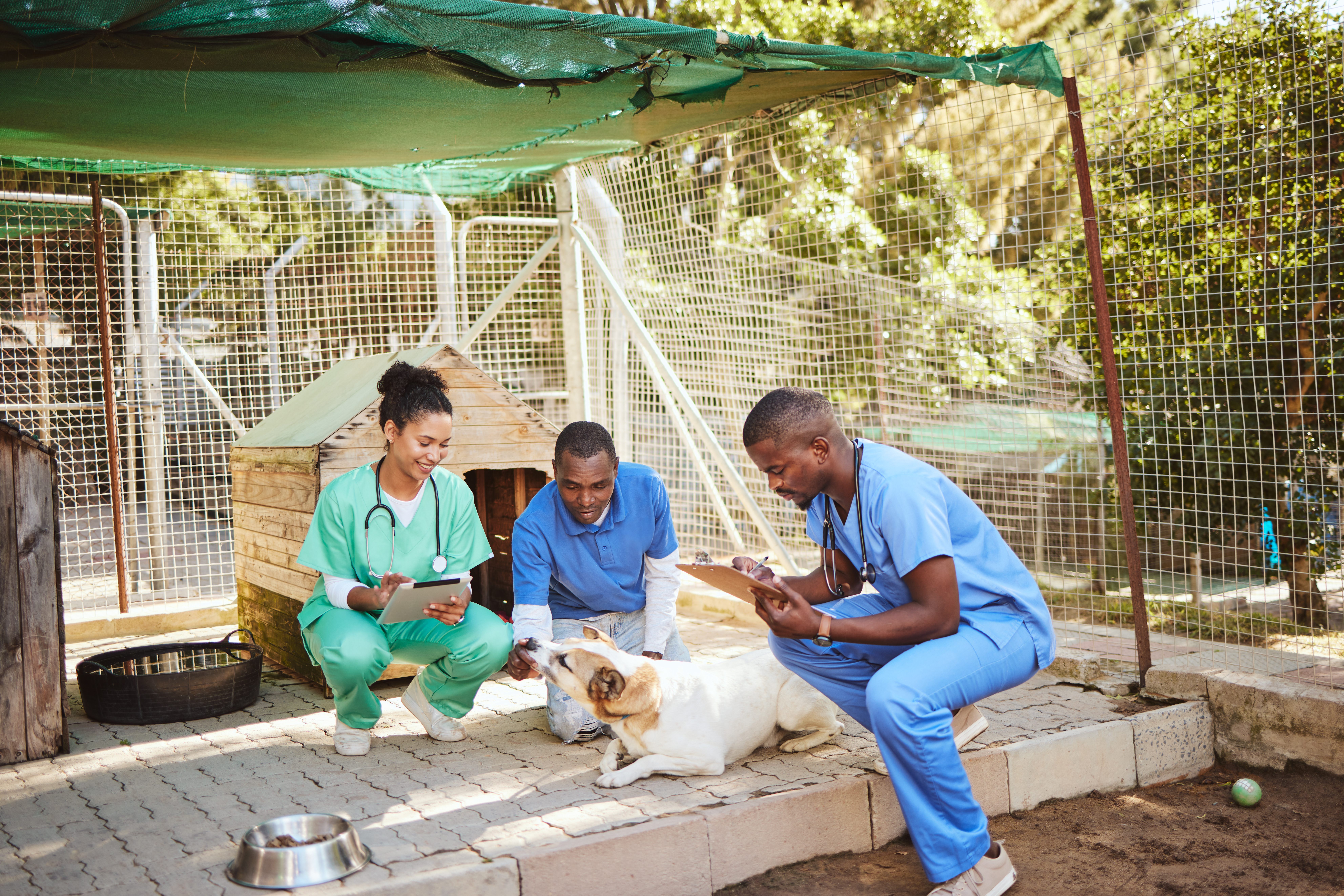
Veterinary PACS should reduce friction: fast access, clean organization, easy priors, secure sharing, and solid integrations.
What is a Veterinary PACS (in real-life terms)?
A PACS (Picture Archiving and Communication System) is the hub that stores, organizes, and displays imaging studies—radiographs,
ultrasound, CT, MRI—so your team can retrieve them instantly, compare them over time, and share them with specialists when needed.
Most PACS systems rely on DICOM (Digital Imaging and Communications in Medicine), the international standard that helps
different imaging devices and software communicate reliably. For an authoritative overview, see
dicomstandard.org.
In a veterinary clinic, PACS must support:
- Fast image ingest from modalities (DR/CR, ultrasound, CT, etc.)
- Clean organization by patient + visit + study type
- Rapid viewing on any workstation (and increasingly, any device)
- Easy sharing for consults and teleradiology
- Simple training for techs and doctors who don’t have time for “enterprise software”
If you want to see how Asteris approaches veterinary imaging foundations, start here:
Keystone PACS.
Why Human PACS Often Doesn’t Fit Veterinary Reality
Many clinics end up with PACS platforms originally built for human hospitals, lightly repackaged for veterinary use.
On paper, they look fine. In real workflows, they create friction—because veterinary medicine isn’t “small human medicine.”
1) Patient structure doesn’t match veterinary reality
Human PACS assumes one species, standardized anatomy terms, consistent naming conventions, and predictable demographic fields.
Veterinary clinics manage multiple species, variable anatomy, and (in equine especially) barn-based or herd workflows.
When the system forces awkward workarounds, the result is predictable: slower search, messier case histories, and more time spent “finding the study”
than reading the images.
2) Workflow complexity no one asked for
Human hospital PACS is designed for large IT departments, dedicated radiology staff, and rigid processes.
Veterinary clinics need speed, simplicity, and minimal clicks—because the same people running imaging are often also running the room.
3) Teleradiology is treated as an add-on (but for vet med, it’s core)
Veterinary teleradiology isn’t optional. It’s foundational—especially for general practice, ER, and clinics with rotating caseloads.
A true veterinary PACS makes it easy to share studies securely, keep histories clean, and track reports without copy/paste chaos.
For best-practice guidance on quality and safety in veterinary teleradiology, see the consensus statement:
ACVR/ECVDI teleradiology consensus (PubMed).
What Clinics Actually Need From a Veterinary PACS
This is where marketing slides fade and daily reality takes over. A veterinary PACS should reduce friction, not add it.
Here are the features that matter because they show up every single day.
Fast image access (always)
If images don’t load quickly and consistently, the PACS fails—full stop. Speed matters because doctors review cases between appointments,
techs need confirmation before moving patients, and emergencies don’t wait for buffering.
Clean organization that matches how clinics actually think
Good PACS organizes imaging by patient and visit, with clear labels and timestamps. Clinics shouldn’t need a training manual to find last year’s
radiographs—or guess which series is the “right one.”
Effortless comparison with prior studies
Comparing current and prior images is one of the most common tasks in veterinary radiology. Your PACS should make it easy to pull prior studies instantly,
sync views side-by-side, and compare across modalities.
Sharing built into the workflow (not workarounds)
Emailing screenshots isn’t a workflow. A modern veterinary PACS should support secure sharing and straightforward consult workflows—without creating
a second job for your staff.
Access on any device, anywhere (with real security)
Clinics don’t live at one workstation anymore. Doctors review cases between rooms, from home, on-call, and across locations.
“Any device” is only useful if it’s paired with real security practices and sensible access controls.
Cloud vs On-Prem Veterinary PACS: What Actually Matters
The cloud vs on-prem debate gets oversimplified. Most clinics don’t care about architecture for its own sake—they care about reliability,
speed, cost predictability, scalability, and security.
If you want a deeper breakdown, here’s the Asteris guide:
Veterinary PACS: Cloud, On-Premise, or Hybrid?
Cloud PACS tends to be a strong fit when:
- You need remote review (on-call, multi-doctor, multi-site)
- You want fewer server headaches and backup responsibilities
- You expect imaging volume to grow and don’t want hardware limits
On-prem can make sense when:
- Your internet is unstable and you need local-only access as a priority
- Your clinic has dedicated IT support and prefers controlling hardware end-to-end
Bottom line: pick the option that keeps your team moving and your images accessible without extra manual work.
Integrations Matter More Than a Long Feature List
A PACS doesn’t live in isolation. If it doesn’t integrate cleanly with the rest of your clinic’s workflow, your team pays the price in double entry,
lost time, and avoidable errors.
At minimum, your veterinary PACS should play nicely with:
- Practice management systems (so patient data stays consistent)
- Teleradiology partners (so sending and receiving is smooth)
- Dictation and reporting (so reports don’t become a copy/paste marathon)
Explore integrations here:
Asteris Integrations
If your clinic relies on dictation/reporting efficiency:
Keystone Omni
A Practical Veterinary PACS Buyer Checklist
When you evaluate PACS, don’t start with “how many features.” Start with “how does this feel on a Tuesday?”
Use these questions to keep demos grounded in real-life workflow.
Workflow & speed
- How fast do images load during peak hours?
- How many clicks to find last year’s relevant study?
- Can you compare current vs prior quickly—without hunting?
Sharing & collaboration
- How do you securely share a study for consult or teleradiology?
- Can you track what was sent and what report came back?
- Can outside specialists access what they need without chaos?
Integrations & continuity
- Does it integrate with your PMS and your imaging modalities?
- Does it reduce duplicate data entry (or create more)?
- What does onboarding and support actually look like?
Governance basics
Record retention requirements vary by jurisdiction. AVMA summarizes that many states commonly require retention in the 3–5 year range after the most recent visit:
AVMA summary on record retention
For broader ethical context:
AVMA Principles of Veterinary Medical Ethics
FAQ
What is a veterinary PACS?
A veterinary PACS stores, organizes, and displays medical images so veterinary teams can retrieve and share studies quickly across devices, locations,
and specialists—without relying on manual workarounds.
Why do human PACS systems often fail in veterinary clinics?
Human PACS tools are built for human hospital workflows and assumptions. Veterinary clinics often need faster, simpler interfaces, multi-species-friendly
organization, and seamless sharing for consults and teleradiology.
Is cloud veterinary PACS better than on-prem?
It depends on your clinic’s needs. Cloud PACS can reduce server maintenance and improve remote access and multi-location workflows. On-prem can make sense
if your internet is unreliable and you have strong local IT support. The best choice is the one that delivers speed, reliability, predictable costs,
and sensible security.
What are the most important features to look for?
Prioritize fast image loading, clean organization, easy comparison with prior studies, secure sharing for consults/teleradiology, dependable integrations,
and a workflow your team can learn quickly.
What is DICOM and why does it matter?
DICOM is the international standard that helps imaging devices and software exchange images and related information reliably.
Learn more at dicomstandard.org.
Next reads
- Veterinary PACS: Cloud, On-Premise, or Hybrid?
- Comparing Veterinary PACS: What Matters in Practice
- DICOM in Veterinary Imaging: What Vets Actually Need to Know
- Veterinary PACS Guide (2026): Features, Workflow + Pricing
- Veterinary PACS vs Generic Medical PACS
Want to see Keystone in action?